
Roof Claim Denied in Lubbock? What to Do Next
Quick answer: A roof claim denied in Lubbock, Texas, is not the end of the story. Start with the denial letter, because Texas law says your insurer has to explain its reasons in writing. Then get an honest second inspection with photos and a written report, ask for a re-inspection in writing, and if the fight is about the amount rather than coverage, your policy’s appraisal clause or a complaint to the Texas Department of Insurance are the next steps. Do all of this with evidence, not anger, and do not let anyone promise to make your deductible disappear. That has been illegal in Texas since 2019.
Why this matters right now: the Oklahoma State Farm settlement
On November 13, 2026, the Oklahoma Insurance Department announced a settlement of more than $45 million with State Farm after a market conduct examination found the company had improperly denied or failed to pay for roof damage on Oklahoma homeowners’ wind and hail claims. At least $35 million is set aside to make affected homeowners whole, $10 million goes to Oklahoma’s Strengthen Oklahoma Homes grant program, and $2.86 million covers fines and examination expenses. Oklahoma homeowners whose wind or hail claim had a date of loss between January 1, 2021 and December 31, 2025 and was closed without payment can have it independently reviewed. State Farm disagrees with the findings, and the settlement covers Oklahoma only, so it does not reopen Texas claims. But it proves something Lubbock homeowners should know: regulators do check denied roof claims, and a first “no” is sometimes wrong.
Step 1: Read the denial letter slowly
Under Texas Insurance Code Section 542.056, an insurer that rejects a claim has to tell you why, in writing, and cite the policy language it relied on. That letter is your map. Read it against your own policy. Common reasons in Lubbock are “wear and tear,” “no storm damage found,” “cosmetic damage only,” or “damage below your deductible.” Each one points to a different response, so do not argue on the phone before you know which reason you were given. A roof claim denied for any of these reasons can still be challenged, but only with evidence that answers the specific reason given. You can also ask for your full claim file, including the adjuster’s notes and photos, under Section 542.006.
Step 2: Get a second inspection, with proof
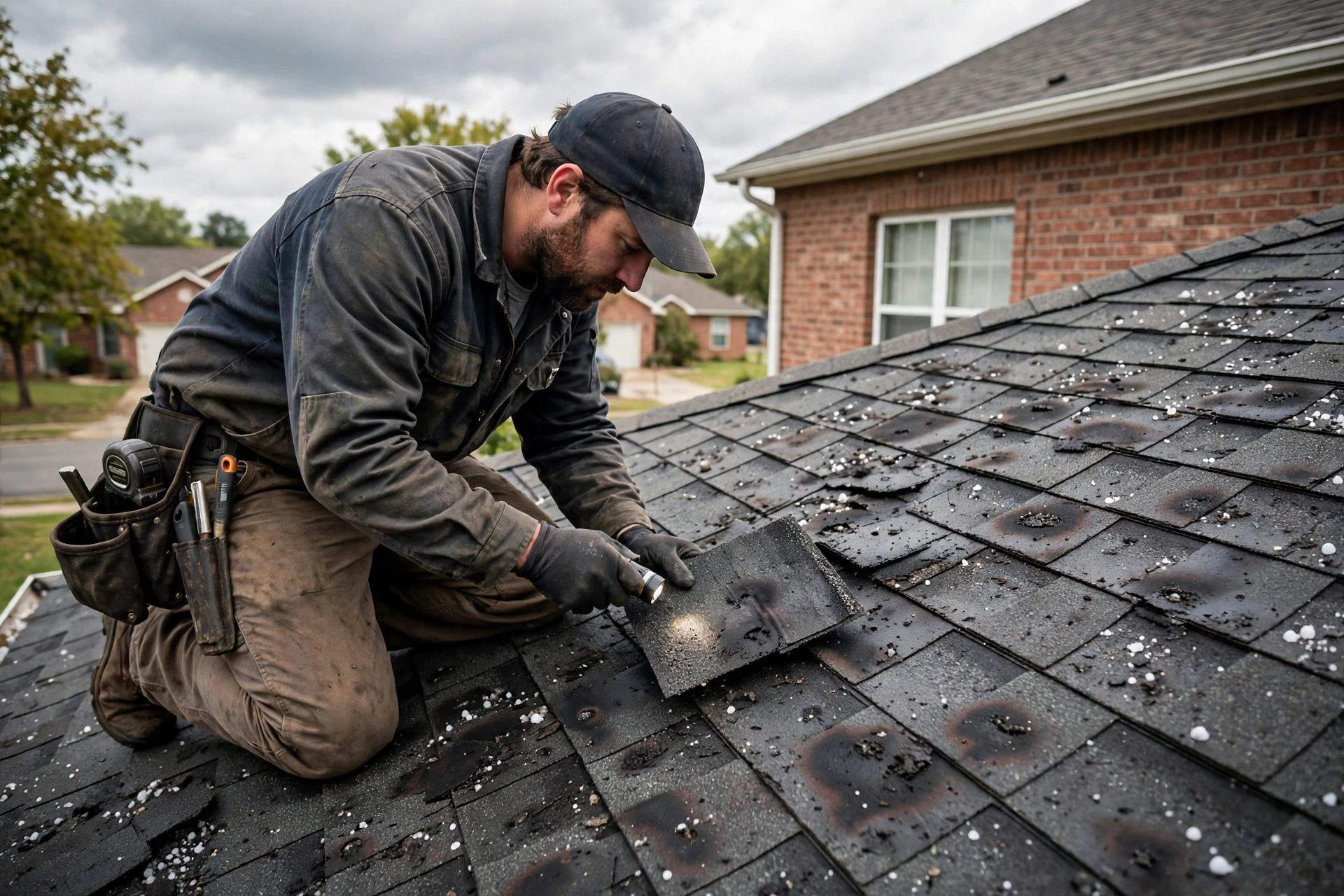
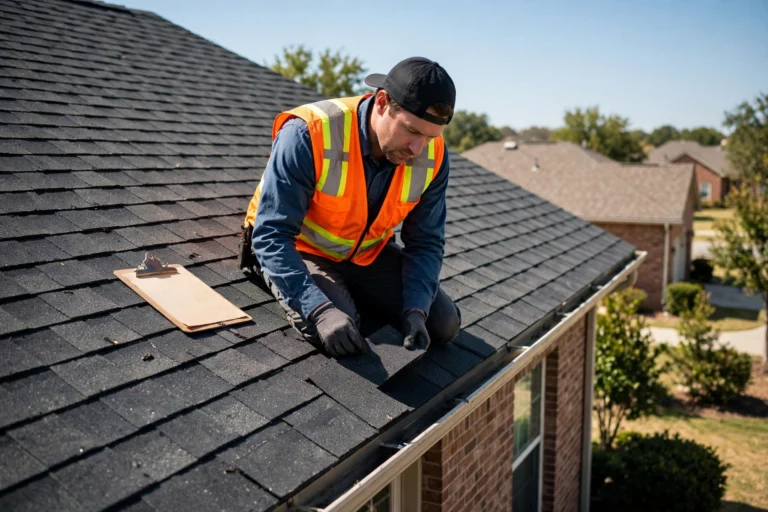
Have a roofer who works storm claims inspect the roof slope by slope and give you a written report with dated photos, marked test squares, and an itemized estimate. In Lubbock this matters more than most places. Lubbock County logged 106 hail events and $187.8 million in damage between 2016 and 2025, and the September 15, 2026 storm alone put an estimated 1.25 to 2 inch hail over about 4,100 homes. A denial that says “no storm damage” is weak if your roof took hail on a documented storm date and the photos show bruised shingles. Keep the storm date, the photos, and the report together. One honest limit: a roofing contractor documents and repairs the roof. It cannot negotiate your claim for you. Under Texas Insurance Code Chapter 4102, that job belongs to a licensed public adjuster or an attorney.
Step 3: Ask for a re-inspection, in writing
Write back to the carrier, point to the specific reason in the denial letter, attach the new report and photos, and ask them to reopen the claim and send an adjuster back out, ideally with your roofer present. The Texas Department of Insurance itself lists asking the company to reconsider as the first step when you disagree. Keep every letter and email. Paper beats memory.
Step 4: Appraisal, when the fight is about the amount
Most Texas homeowners policies include an appraisal clause. It settles disagreements about the amount of a covered loss, not whether the loss is covered at all. Each side hires its own appraiser, the two appraisers choose an umpire, and if they cannot agree, the umpire’s decision is binding. You pay for your appraiser and half of the umpire’s costs, so appraisal fits a real dollar gap, not a small one. Your policy sets the deadline to demand appraisal, so check it before it passes. If the insurer says there is no covered loss at all, appraisal usually is not the right tool, because that is a coverage dispute.
Step 5: File a complaint with the Texas Department of Insurance
If you believe your insurer treated you unfairly, missed its deadlines, or never explained the denial, you can file a complaint with the Texas Department of Insurance. TDI sends the complaint to the company and requires an answer. Its Help Line is 800-252-3439, 8 a.m. to 5 p.m. Central, Monday through Friday, and complaints can also be filed online at tdi.texas.gov. Be clear about what TDI cannot do: it is not a court and it cannot order your insurer to pay a set amount. A complaint still gets noticed, and it creates a record.
Step 6: Bring in a public adjuster or an attorney
A licensed public adjuster can document the loss and negotiate the settlement for a fee. An attorney handles coverage denials, bad faith claims, and suit deadlines. Texas law generally requires written notice to the insurer at least 61 days before you file suit on a weather claim, and your policy sets its own deadline to sue, often two years and a day after the denial. If you go this route, talk to a Texas attorney who handles property insurance cases. This post is general information, not legal or insurance advice.
What not to do after a denial
Do not throw the letter away, do not accept “wear and tear” without evidence, and do not sign an assignment of benefits without understanding it. Do not hire the door-knocker who shows up the day after a storm. And do not accept any offer to waive or absorb your deductible. That has been illegal in Texas since 2019, and a contractor who offers it is telling you how they do business.
The Lubbock checklist
Read the denial letter and find the exact reason. Get a second inspection with dated photos and a written report. Ask for a re-inspection in writing. Use appraisal if the disagreement is about the amount. File a TDI complaint if the carrier mishandled the claim. Talk to a public adjuster or attorney if the carrier will not engage. A roof claim denied in Texas is a starting point, not a verdict, and the evidence you gather in the first two weeks is what decides it.
Can I reopen a denied roof claim in Texas?
Yes. Ask the insurer to reconsider in writing with new evidence, such as a second inspection report and dated photos, and request a re-inspection. If the disagreement is about the amount, your policy’s appraisal clause may apply.
Does the Oklahoma State Farm settlement help Texas homeowners?
No. The November 13, 2026 settlement covers Oklahoma claims only. It does show that regulators investigate denied roof claims, but Texas homeowners must use Texas routes: reconsideration, appraisal, a TDI complaint, or a public adjuster or attorney.
What if my insurer says the damage is wear and tear?
Ask for the denial in writing with the policy section cited, then get a second inspection. If the roof took hail on a documented Lubbock storm date and the photos show bruised shingles, that evidence answers a wear-and-tear denial.
Can the Texas Department of Insurance force my insurer to pay?
No. TDI can require the company to answer your complaint, but it cannot order payment of a set amount. Appraisal, a public adjuster, or a Texas property insurance attorney are the routes that can change the amount.

One Comment