
Should You File a Roof Insurance Claim in Lubbock? When the Claim Isn’t Worth Filing
Hail hits your roof in Lubbock, and the first instinct is to call your insurer. Sometimes that call is the right move. Sometimes it costs you money and gets you nothing. Filing a claim is not free — even a claim that pays zero goes on your record. Before you file, do the math. It takes five minutes, and it can save you thousands.
The deductible math that surprises everyone
Most Texas homeowner policies carry a separate wind-and-hail deductible, set as a percentage of your home’s insured value — not of the repair bill. In hail-prone areas like Lubbock, 2% is the usual benchmark, and deductibles across Texas have been moving toward 2% in 2026. Take a home insured for $300,000 as an example. At a 1% deductible you pay the first $3,000 yourself. At 2% you pay the first $6,000. Now compare that with what minor hail damage actually costs to fix: minor spot repairs in Texas typically run $300–$1,500, and larger section repairs $1,500–$4,000. If the damage costs $1,200 to repair and your deductible is $6,000, the insurer pays nothing — and the claim still lands on your record. That is the trap: damage below the deductible pays zero, but the filing itself is permanent.
When filing DOES make sense
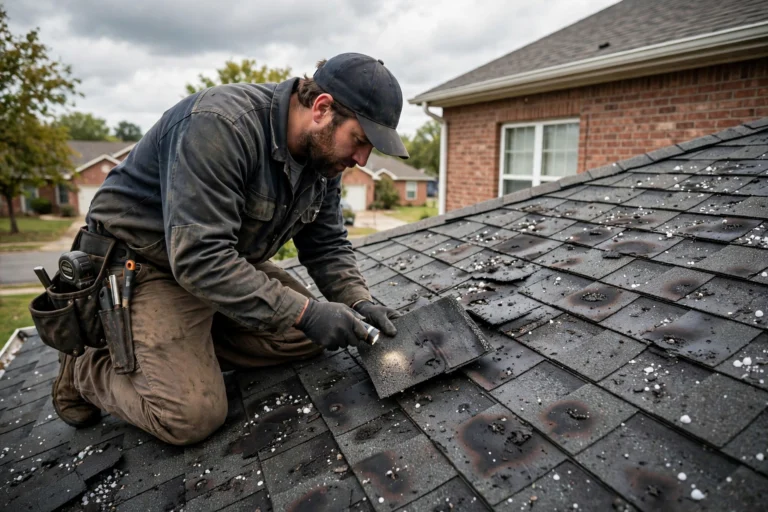
A claim is worth filing when the damage is widespread and functional — not just cosmetic marks. Hail has to fracture the shingle mat underneath the granules to count as functional damage; scuffs and dents alone usually do not. When functional hits are spread across the slopes, the honest call is usually a full replacement, and that is where the numbers flip: a typical Texas roof replacement runs $8,000–$18,000 or more, and State Farm’s 95,200 Texas hail claims in 2025 averaged about $15,000 each. On a job that size, the deductible becomes the smaller number. Your policy type matters just as much. Replacement Cost Value (RCV) pays today’s cost minus the deductible. Actual Cash Value (ACV) subtracts depreciation first. On an $18,000 replacement with a $3,000 deductible, RCV pays $15,000. The same roof on an ACV policy at 10 years old might pay only around $6,000. More Texas carriers moved older roofs to ACV in 2026, so check your declarations page before you assume which one you have.
The hidden cost of filing: your claim record
Every claim you file is recorded, and insurers look at that history when they price your next renewal — or decide whether to renew at all. A small claim that paid nothing can still follow you. That is why the question is never just “is my roof damaged?” but “is the damage big enough that the payout is worth a claim on my record?” If the repair is close to or below your deductible, paying out of pocket is usually the better financial decision.
The 2026 Texas reality
Three things changed this year that make the math tighter for Lubbock homeowners. First, wind-and-hail deductibles keep moving toward 2% of dwelling coverage — the Texas FAIR Plan dropped its 1% option on July 1, 2026. Second, more carriers are converting older roofs to ACV, which shrinks payouts on the roofs most likely to be hit. Third, cosmetic-damage exclusions are growing, especially on metal roofs. None of this changes what your roof needs. It changes what a claim will cost you — and what it will pay.
What to do instead of filing right away
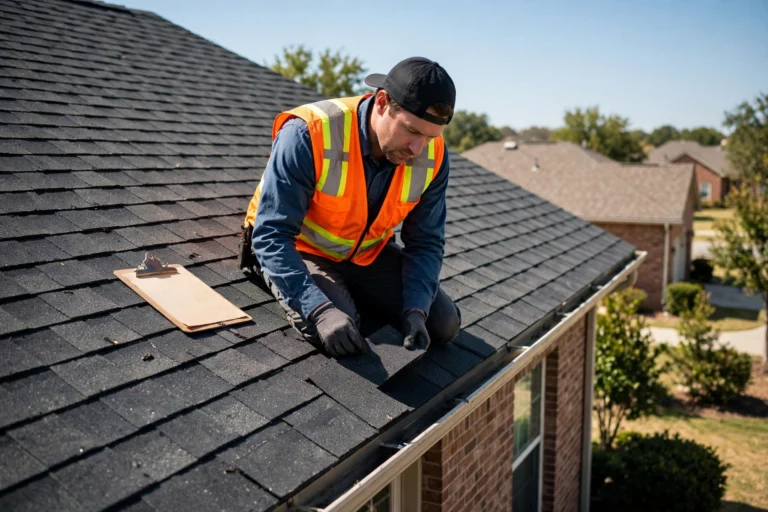
- Get a free roof inspection first. A roofer documents the damage, the date of the storm, and whether it is functional or cosmetic — before any claim exists.
- Get the repair number in writing. Compare it with your deductible. If the repair is below the deductible, do not file.
- Keep the storm date. Every claim is anchored to a date of loss, and carriers verify it against weather records. Lubbock’s hail season runs March through June, and the county logged 106 hail events with $187.8 million in damage from 2016 to 2025 — but your claim needs YOUR storm’s date.
- If the damage is widespread, file — and file properly. Document everything, file promptly, and keep copies. Our step-by-step guide covers the process
- If the claim is denied, do not just accept it. Read the denial letter, get a second inspection, and ask for a re-inspection in writing. A denied claim can be challenged — see our guide on what to do when a roof claim is denied
What not to do
Never let anyone offer to waive or absorb your deductible. That has been illegal in Texas since 2019 under HB 2102, and a roofer who offers it is telling you how they do business. And never file a claim before you know the size of the damage — a five-minute inspection beats a five-year claim record.
Bottom line
File when the damage is real, widespread, and well above your deductible. Pay out of pocket when it is not. The roof does not care either way — but your insurance record does.
This article is general information, not insurance or legal advice. Coverage, deductibles, and payouts vary by company and policy. Check your declarations page, and contact the TDI Help Line at 800-252-3439 with questions about a specific policy.
FAQs
Should I file a roof insurance claim for minor hail damage in Lubbock?
Usually no. Minor spot repairs in Texas typically cost $300–$1,500, which is below most wind-and-hail deductibles (often 1–2% of your home’s insured value). A claim that pays nothing still goes on your insurance record.
How do I know if hail damage is bad enough to file a claim?
Get a free inspection first and get the repair cost in writing. If the damage is functional — hail that fractured the shingle mat across the slopes — and the repair or replacement cost is well above your deductible, filing makes sense. Cosmetic marks alone usually do not.
Does filing a roof claim affect my insurance?
Yes. Every claim is recorded and insurers review your claim history at renewal. A small claim that pays nothing can still affect future premiums and renewals, which is why the file-or-not decision matters.
What is the difference between RCV and ACV on a roof claim?
Replacement Cost Value pays today’s replacement cost minus your deductible. Actual Cash Value subtracts depreciation first, so it pays much less on an older roof. More Texas carriers moved older roofs to ACV in 2026 — check your declarations page.